
Stonex Machine Control Systems
High-Performance GNSS Without the Premium Price

4
A Modern Alternative to Traditional Machine Control
Machine control is no longer just for tier-one contractors.
With Stonex GNSS technology, Red Edge Resources delivers a solution that combines:
- High-end accuracy
- Modern GNSS capability
- Significantly lower cost
This makes Stonex one of the best-value machine control platforms available in Australia today.
What is Stonex Machine Control?
Stonex machine control systems use advanced GNSS receivers and sensors to provide:
- Real-time positioning
- Accurate excavation and grading guidance
- Seamless integration between base, rover, and machine
Suitable for:
- Excavators
- Dozers
- Graders
Key Benefits of Stonex Machine Control
1. High-End GNSS Performance
Stonex receivers deliver premium-level GNSS capability, including:
- Multi-constellation tracking (GPS, GLONASS, Galileo, BeiDou)
- Fast RTK initialisation
- Stable accuracy in challenging environments
This results in:
- Precise cuts and fills
- Reduced rework
- Improved productivity on site
2. Cost-Effective Without Compromise
Stonex is known for delivering high performance at a lower cost than traditional brands.
Key advantages:
- Lower upfront investment
- Reduced cost per machine
- Strong ROI across multiple installs
For contractors, this means:
👉 You can deploy more systems across your fleet for the same budget.
3. Open & Flexible System Architecture

Unlike locked ecosystems, Stonex systems are built to be:
- Compatible with RTCM correction formats
- NTRIP-ready for network corrections
- Adaptable to different site setups
This flexibility allows:
- Integration with existing survey gear
- Easier expansion across projects
- No reliance on a single vendor
4. Seamless Integration with Survey Workflows
One of Stonex’s biggest strengths is its tight integration between survey and machine control.
With solutions like Cube software and GNSS rovers, you can:
- Share data between survey and machines
- Reduce duplication of work
- Improve site coordination
This is especially valuable for:
- Civil contractors
- Survey teams managing construction projects
- Mining operations requiring precision
5. Scalable for Growing Operations
Stonex machine control is designed to scale with your business.
- Start with one machine
- Expand to full fleet coverage
- Standardise across all equipment
Without the exponential cost increases seen with traditional providers.
6. Backed by Red Edge Resources
Technology is only part of the equation — implementation is everything.
With Red Edge, you get:
- Local Australian support
- On-site installation and calibration
- Real-world machine control experience
- Ongoing support without the red tape
Built for Australian Conditions
Stonex systems supplied by Red Edge are deployed in:
- Mining environments
- Civil construction projects
- Remote and regional sites
Designed to handle:
- Dust and vibration
- Harsh weather
- Continuous operation
Stonex vs Traditional Machine Control
| Feature | Traditional Brands | Stonex (Red Edge) |
|---|---|---|
| Cost | Very High | Significantly Lower |
| Accuracy | High | High |
| Flexibility | Locked | Open |
| Integration | Limited | Strong (Survey + Machine Control) |
| Scalability | Expensive | Cost-Effective |
When Stonex is the Right Choice
Stonex machine control is ideal if you want:
- A premium-performance system without the premium price
- Integration between survey and machine control
- Flexibility across sites and correction methods
- A scalable solution for growing operations
The Bottom Line
Stonex delivers:
- High-end GNSS performance
- Flexible system architecture
- Lower total cost of ownership
Combined with Red Edge expertise, you get:
- Systems that are correctly configured
- Reliable performance on site
- A solution built around your operation — not a locked ecosystem
Get the Right Setup from Day One
Machine control success depends on correct setup and integration.
Red Edge can design a Stonex solution that:
- Matches your machines
- Integrates with your survey workflow
- Works reliably in your environment
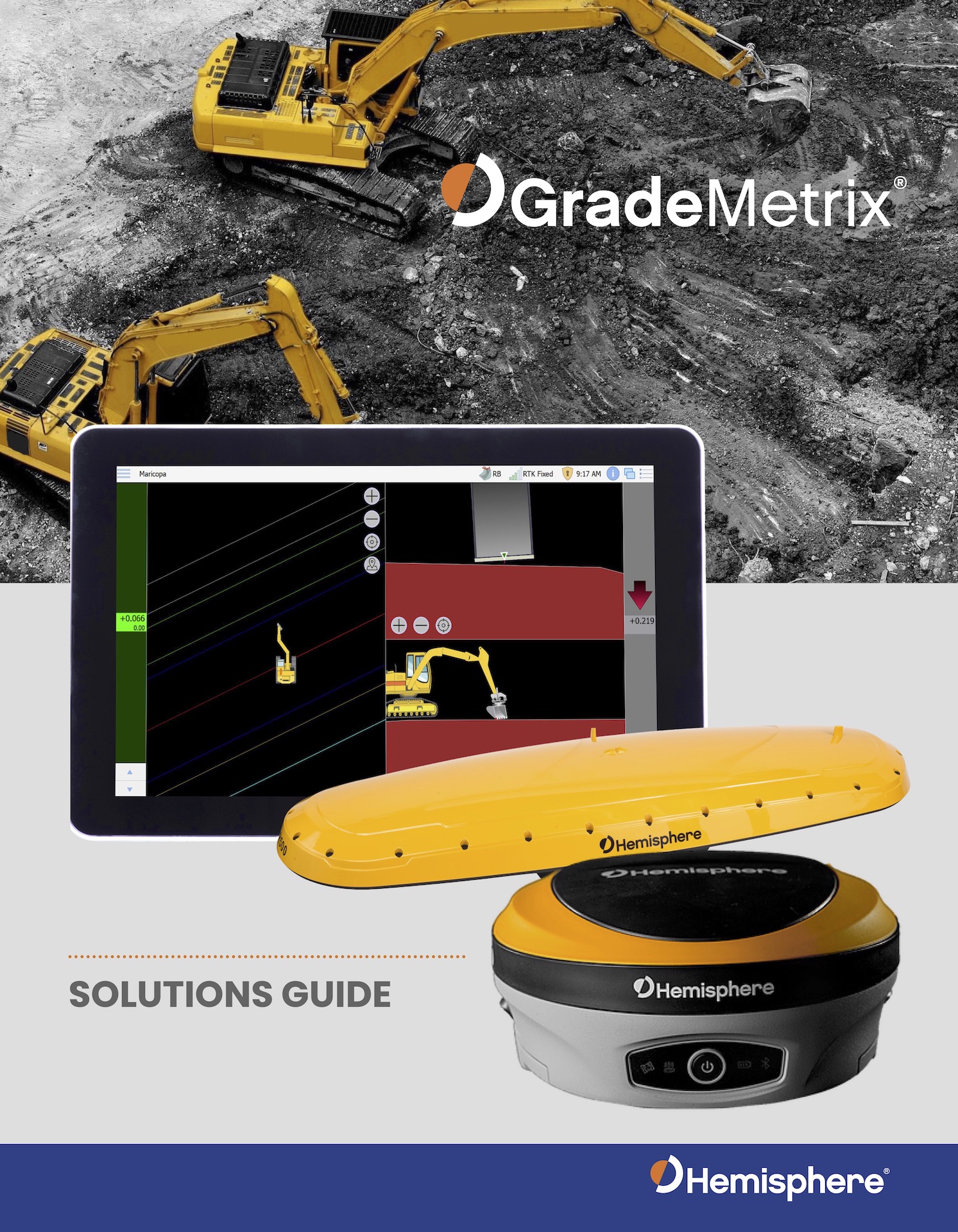
Hemisphere Machine Control Systems
Reliable, Flexible & Cost-Effective Solutions from Red Edge Resources
4
A Practical Alternative in Machine Control
When it comes to machine control, most contractors are looking for three things:
- Accuracy
- Reliability
- Cost control
Hemisphere GNSS technology, supplied and supported by Red Edge Resources, delivers a strong balance of all three — making it a highly practical solution for civil and mining operations.
What is Hemisphere Machine Control?
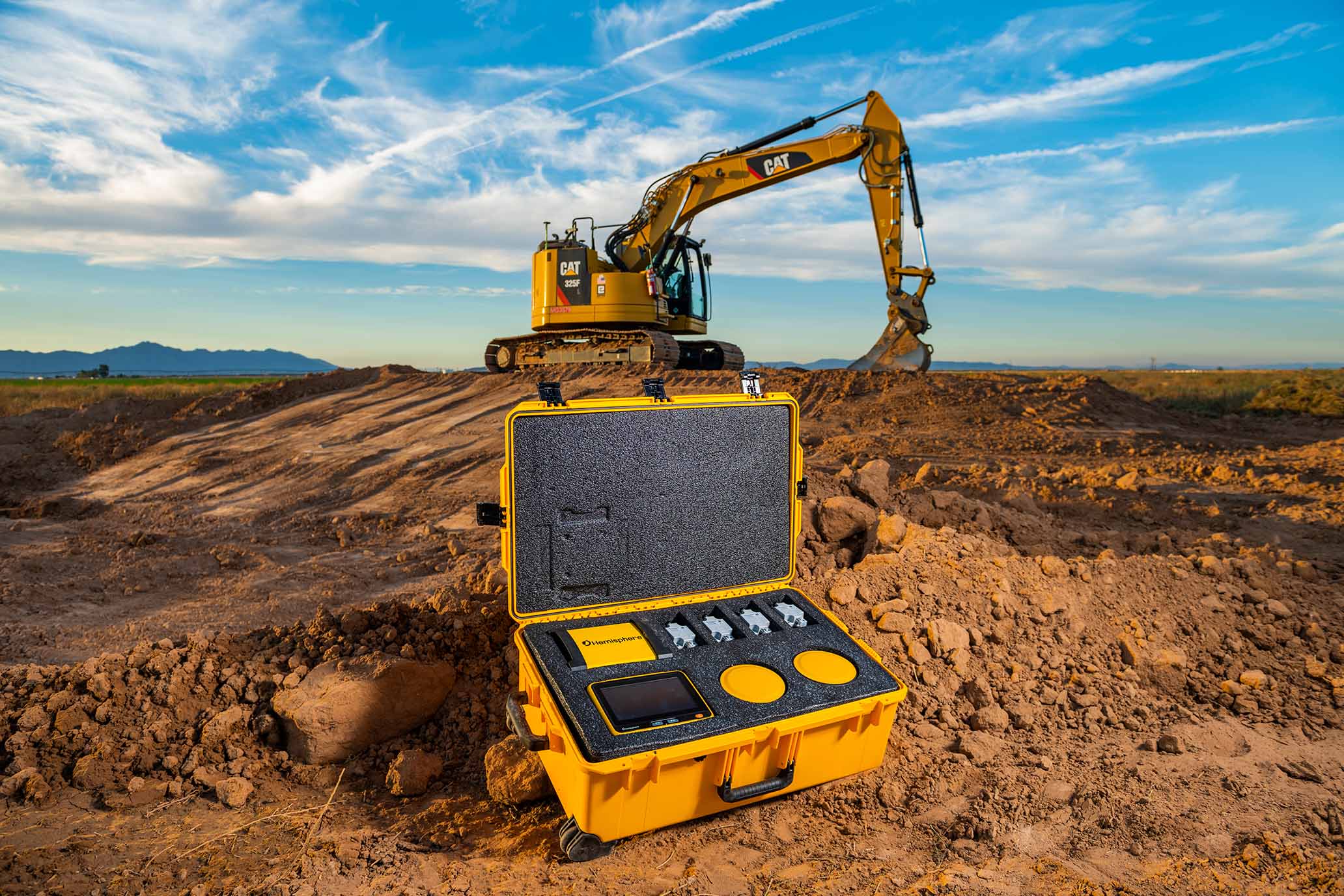
Hemisphere systems utilise advanced GNSS positioning technology to provide:
- Real-time machine positioning
- Accurate blade/bucket guidance
- Integration with base stations and correction networks
These systems are commonly deployed on:
- Excavators
- Dozers
- Graders
Key Benefits of Hemisphere Machine Control
1. Proven GNSS Performance
Hemisphere receivers are built on reliable GNSS technology, supporting:
- GPS, GLONASS, Galileo and BeiDou
- RTK positioning for high-accuracy work
- Stable performance across varied environments
For most construction and mining applications, this delivers the accuracy required without overpaying for unnecessary features.
2. Cost-Effective System Deployment
One of the biggest advantages of Hemisphere is affordability.
Compared to tier-one brands:
- Lower upfront hardware cost
- Reduced system cost per machine
- Ideal for scaling across fleets
This allows contractors to:
- Equip more machines
- Increase productivity across site
- Improve ROI faster
3. Flexible Integration Options
Hemisphere systems are well suited for mixed environments, allowing integration with:
- Existing base stations
- NTRIP correction services
- Third-party hardware (where compatible)
This flexibility is critical for:
- Contractors working across multiple sites
- Operations transitioning from older systems
- Businesses avoiding vendor lock-in
4. Strong Fit for Entry to Mid-Tier Machine Control
Hemisphere is an excellent solution for:
- Entry-level machine control users
- Contractors upgrading from laser or manual methods
- Projects where full high-end systems are not required
It provides:
- Significant productivity gains
- Reduced rework
- Faster job completion
5. Supported Locally by Red Edge Resources
Technology is only as good as the support behind it.
With Red Edge, you get:
- Local Australian support
- Installation expertise across machines
- Practical troubleshooting (not call centres)
- Real-world experience in mining and civil
Important Consideration: Corrections & Compatibility
While Hemisphere hardware is highly capable, correction protocol compatibility (such as CMR+) can vary across systems and setups.
This means:
- Some legacy integrations may not behave consistently
- Not all third-party systems will connect seamlessly
The key advantage of working with Red Edge is:
👉 You get real-world tested solutions, not just theoretical compatibility.
We ensure:
- Correct configuration from day one
- Reliable correction workflows (RTCM, NTRIP where applicable)
- Systems that actually work on site
When Hemisphere is the Right Choice
Hemisphere machine control is ideal when you need:
- A cost-effective alternative to premium brands
- Reliable GNSS accuracy for construction and mining
- Flexible deployment across multiple machines
- A scalable solution without heavy ongoing costs
Hemisphere + Red Edge = Practical Performance
By combining Hemisphere GNSS with Red Edge’s:
- Installation expertise
- Communications solutions
- Site integration knowledge
You get a system that is:
- Fit for purpose
- Cost-efficient
- Proven in Australian conditions
The Bottom Line
Hemisphere machine control offers a strong balance of performance and affordability.
When deployed correctly, it delivers:
- Accurate results
- Reduced operating costs
- Increased machine utilisation
And with Red Edge backing it, you get:
- Systems that work
- Support that understands your operation
- Solutions built for real-world conditions
Get Advice Before You Buy
Not every system suits every site.
If you’re considering Hemisphere machine control, Red Edge can help design a setup that:
- Matches your machines
- Works with your corrections
- Delivers real productivity gains
Cost-Effective Machine Control Solutions in Australia
Why More Contractors Are Switching to Red Edge Resources
The Problem with Traditional Machine Control
For years, machine control systems have been dominated by high-cost providers like Trimble and Topcon. While these systems are powerful, they often come with:
- High upfront capital costs
- Expensive subscription models
- Locked ecosystems
- Costly upgrades and support
For many contractors, especially in civil and mining, this creates a barrier to entry — or limits how many machines can be fitted out.
A Smarter, More Cost-Effective Approach
At Red Edge Resources, the focus is simple:
Deliver the same core functionality — at a fraction of the cost.
By combining:
- Modern GNSS technology
- Flexible hardware platforms
- Open compatibility systems
Red Edge provides machine control solutions that can be up to 50% cheaper than traditional tier-one brands — without sacrificing performance where it matters.
What Makes Red Edge More Cost-Effective?
1. Lower Hardware Costs
Red Edge leverages high-performance GNSS hardware (such as Stonex systems) that delivers:
- Multi-constellation tracking (GPS, GLONASS, Galileo, BeiDou)
- High accuracy for grading and excavation
- Reliable performance in tough environments
Without the premium pricing of legacy brands.
2. No Locked Ecosystem
Unlike traditional providers, Red Edge systems are designed to be:
- Compatible with multiple correction formats (RTCM, NTRIP)
- Flexible with base stations and networks
- Adaptable across different machines and sites
This gives you:
- Freedom to scale
- No vendor lock-in
- Reduced long-term costs
3. Reduced Subscription & Licensing Costs
Many legacy systems rely heavily on:
- Ongoing subscriptions
- Paid feature unlocks
- Expensive software upgrades
Red Edge solutions minimise this by offering:
- More inclusive system packages
- Lower ongoing costs
- Practical, site-focused functionality
4. Scalable Across Your Fleet
Instead of investing heavily into one or two machines, Red Edge allows you to:
- Fit out more machines for the same budget
- Standardise systems across your fleet
- Increase productivity across the entire operation
Built for Australian Conditions
Red Edge systems are designed specifically for:
- Mining environments
- Civil construction projects
- Remote and regional sites
With a focus on:
- Rugged hardware
- Reliable communications
- Easy field servicing
Integrated Communications = More Savings
One of the biggest hidden costs in machine control is connectivity.
Through partnerships and solutions aligned with systems like Hypha hardware, Red Edge enables:
- Efficient data transfer between base and machines
- Starlink-ready remote connectivity solutions
- Reduced reliance on expensive traditional networks
Importantly, hardware solutions are supplied with embedded software and support frameworks, while telecommunications services (SIMs, airtime, data) are handled separately
This separation allows:
- Greater flexibility in choosing providers
- Better control over ongoing costs
Real-World Cost Comparison
| Feature | Traditional Providers | Red Edge |
|---|---|---|
| Initial Cost | Very High | Up to 50% Lower |
| Subscriptions | Ongoing | Minimal |
| Flexibility | Locked Ecosystem | Open & Adaptable |
| Fleet Scaling | Expensive | Cost-Effective |
| Support Model | Tiered/Indirect | Direct & Practical |
Who Is This Ideal For?
Red Edge machine control is perfect for:
- Civil contractors scaling operations
- Mining companies needing multiple installs
- Owner-operators wanting entry into GPS machine control
- Survey teams integrating with machine control workflows
The Bottom Line
If you’re paying premium prices for machine control, you’re often paying for brand — not necessarily better outcomes.
Red Edge offers:
- Proven performance
- Modern GNSS capability
- Flexible system design
- Significantly lower total cost of ownership
Why Choose Red Edge Resources?
- Australian-based support
- Experience in mining and civil industries
- End-to-end solutions (machine control, GNSS, communications)
- Practical, no-nonsense approach to technology
Get Started
If you’re looking to reduce costs and increase efficiency across your fleet, it’s time to look at a smarter alternative.
Talk to Red Edge Resources about a cost-effective machine control solution tailored to your operation.