Stonex drill & piling rig guidance
Every hole,
where the plan
says it goes.

Blast hole drilling
Solar farm piling
Foundation & civil piling
Retrofits existing rigs

The bottleneck
The rig waits
for the pegs
On a traditional set-out, a survey crew marks every hole or pile position before the rig can start. On a pattern of a few dozen holes that’s manageable. On a solar farm with tens of thousands of piles, or a production drill pattern that changes shift to shift, it becomes the thing everything else waits for.
Then the pegs get knocked out by traffic, buried by dust or moved by weather — and someone goes back to re-mark them. Meanwhile a rig that costs real money per hour is standing still, and the operator is guessing or waiting.
GNSS guidance removes the peg from the process entirely. The design goes into the cab, the operator navigates to each position on screen, and the survey crew is freed up for work that actually needs a surveyor.
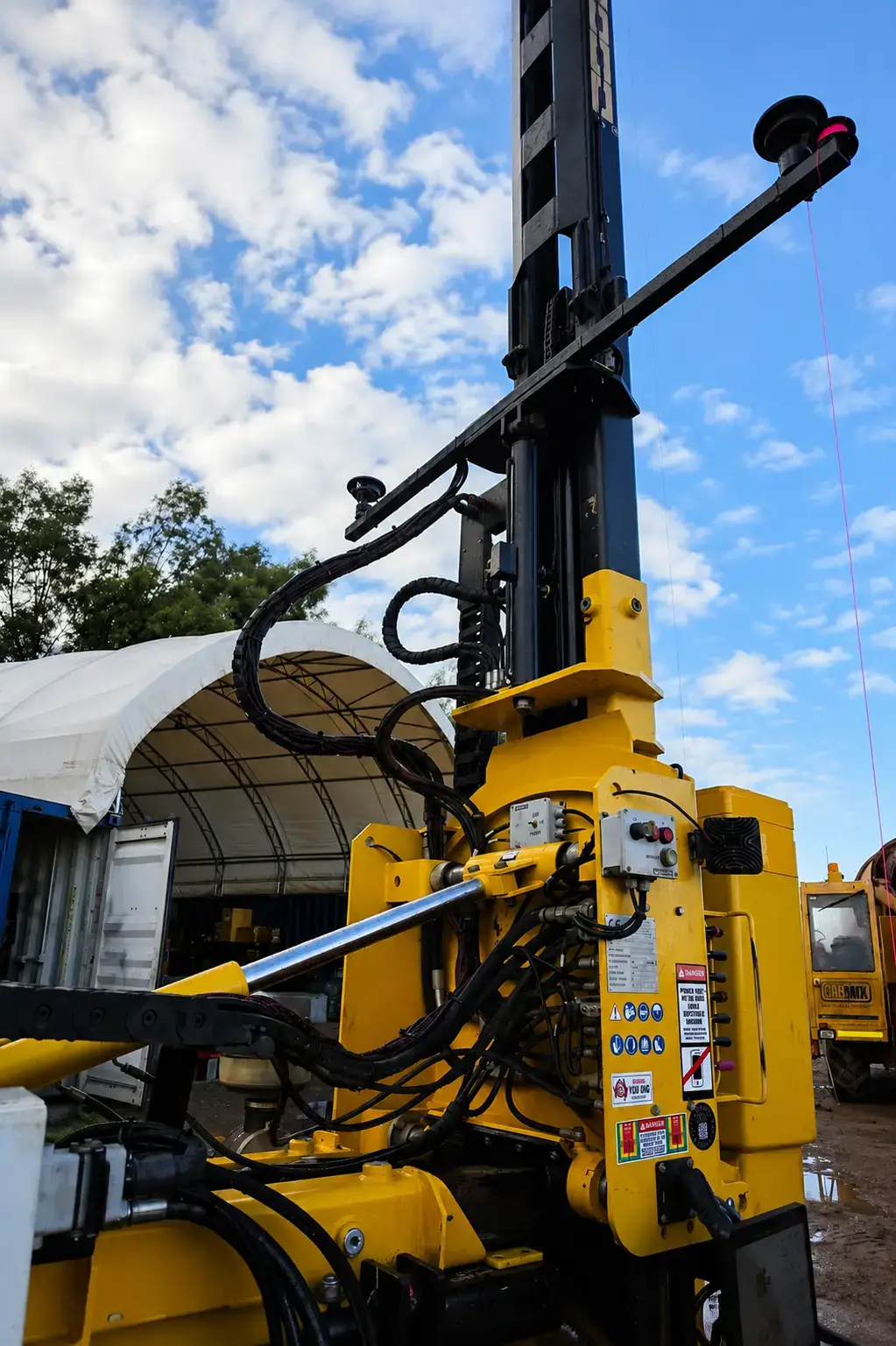
How it works
Plan to hole,
in five steps
Load the plan
Navigate
Position
Drill
Record
Where it’s used
Four jobs where
this pays quickly
Blast hole drilling
- Drill to the pattern without re-marking between shifts
- Consistent hole placement and depth for predictable fragmentation
- As-drilled records back to the office for reconciliation
- Fewer people on foot in an active drill pattern
Solar farm piling
- Navigate pile to pile without pegs across a huge site
- Next position selected automatically — no stopping to re-orient
- Open ground means excellent GNSS conditions
- Accurate piles prevent expensive rework at torque tube and module stage
Foundation & civil piling
- Work directly from the engineering design
- Position, verticality and depth monitored together
- As-built record for the engineer and the client
Barrier, fence & post driving
- Positions set from design chainage rather than measured on site
- Consistent spacing over long runs
- One operator working without a set-out crew
Retrofit
You don’t need
a new rig
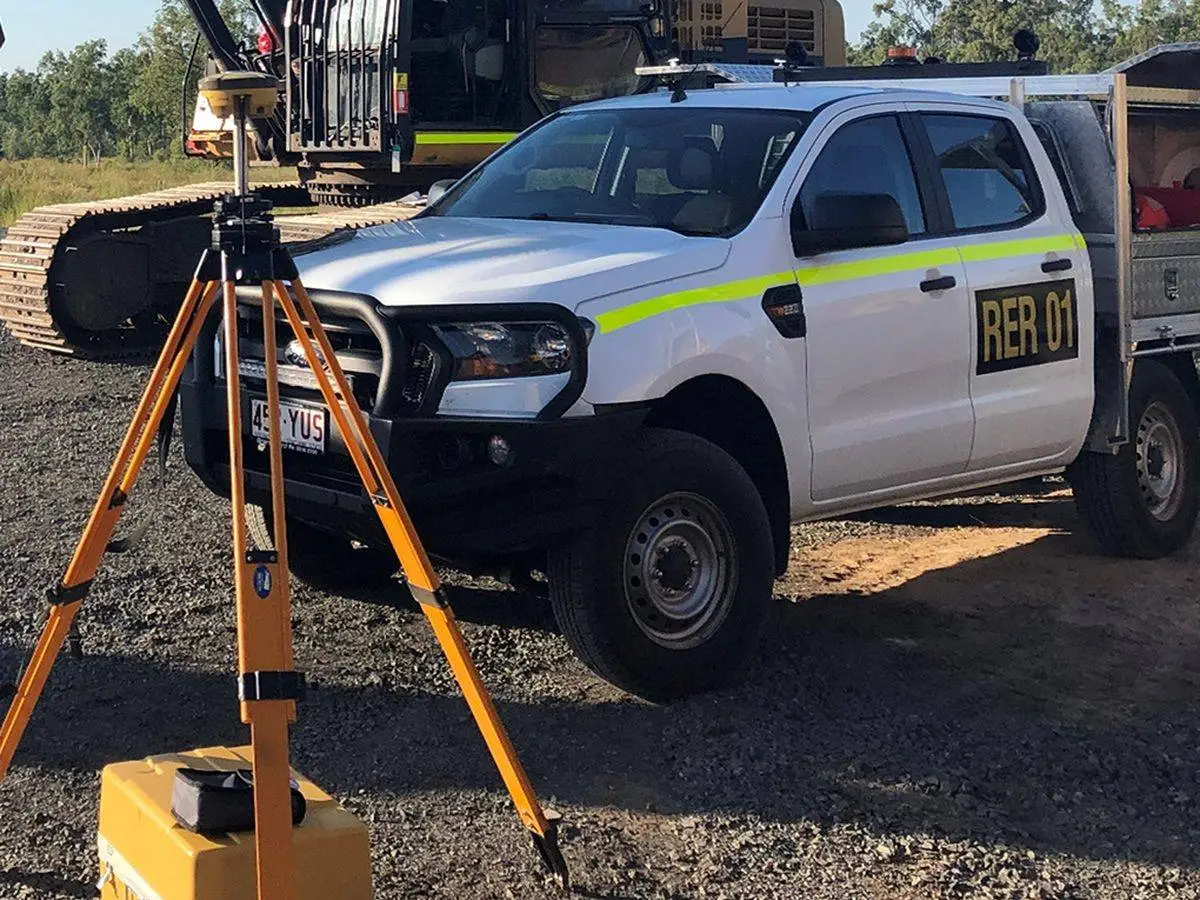
Most rigs can be fitted
with what they already have
There’s a common assumption that machine guidance means buying a new rig with it factory-fitted. In practice most existing rigs can be retrofitted — and a mechanically sound rig with ten years left in it is a much better candidate for a guidance system than a capital replacement.
- Dual GNSS antennas mounted on the cab or mast for position and heading
- In-cab display running the guidance software
- Sensors for mast angle and depth, matched to the rig
- Correction source — your site base station or an RTK network
- Fitted on site or in your yard by our technicians, with downtime planned around you
What you get
Where the money
actually comes from
Rig utilisation
Survey crew freed up
Rework avoided
Production records
Fewer people on foot
in an active pattern
The productivity case usually carries the purchase on its own. But it’s worth adding the second argument, because it costs nothing to include and changes who supports the business case.
Every position that doesn’t need marking is a person who doesn’t need to walk into an active drill pattern or piling area with rigs operating. That’s the same mechanism that produces the productivity gain, counted from the other direction.
Common questions
Before you call
With RTK corrections from a site base station or a network service, centimetre-level positioning is achievable in good conditions. Real-world accuracy depends on satellite availability, baseline length, atmospheric conditions and how the antennas are mounted. We’ll give you a realistic figure for your site and correction source rather than a best-case number from a datasheet.
Most rigs can be retrofitted. Send us the makes, models and years and we’ll confirm before quoting — and tell you if a particular rig isn’t a sensible candidate.
You need a correction source, which can be your own site base station or a network RTK service where coverage exists. On remote sites a base station is usually the answer, and it can feed your other machines and survey rovers at the same time — one datum across the whole site.
Sensors matched to the rig monitor mast angle and drilling depth against the plan, so the hole is correct in three dimensions rather than just position on the surface. The exact configuration depends on the rig.
Included, and hands-on in your rigs on your work. Operator confidence is what determines whether a system gets used properly or worked around — it’s not something to cover in a handover conversation.
Yes, and we’d recommend it on a larger fleet. Fit one, run it on real work for long enough to see the difference in cycle times, then decide. It’s a much better basis for a decision than a demonstration.
Tell us about